Sandcherry: The Easytogrow Shrub That Produces Delicious Fruit
Introduction
Sandcherry trees (Prunus pumila) are a type of shrub that is native to North America. They are known for their beautiful, reddish-purple foliage and their small, dark-purple fruit. Sandcherry trees are relatively easy to grow and care for, and they can be grown in a variety of climates. They are also a valuable addition to the landscape, as they provide food for wildlife and beauty for the home gardener.
Main Content
- Physical Characteristics
Sandcherry trees are typically 6-10 feet tall and 4-6 feet wide. They have a spreading or upright growth habit and a rounded crown. The leaves are simple, oval-shaped, and have a reddish-purple color. The flowers are white or pink and are produced in clusters in the spring. The fruit is a small, round berry that is dark purple in color. The fruit is sour and is not typically eaten fresh. However, it can be used to make jams, jellies, and pies.
- Growing Conditions
Sandcherry trees are relatively easy to grow and care for. They prefer full sun and well-drained soil. They are tolerant of a variety of soil types, but they do not like wet, boggy soil. Sandcherry trees are drought-tolerant once established. They are hardy in USDA zones 3-8.
- Propagation
Sandcherry trees can be propagated from seed, but the seedlings may not be true to the parent plant. The best way to propagate sandcherry trees is from cuttings. Cuttings should be taken in the spring or summer from healthy, mature branches. The cuttings should be about 6 inches long and should have at least three nodes. The cuttings should be dipped in rooting hormone and then planted in a well-draining potting mix. The cuttings should be kept in a warm, humid environment. They will root in about 6-8 weeks.
- Pests and Diseases
Sandcherry trees are generally resistant to pests and diseases. However, they can be susceptible to aphids, scale insects, and powdery mildew. Aphids can be controlled with insecticidal soap or neem oil. Scale insects can be controlled with horticultural oil. Powdery mildew can be controlled with a fungicide.
- Uses
Sandcherry trees are a valuable addition to the landscape. They provide food for wildlife, such as birds, squirrels, and deer. They are also a beautiful ornamental shrub, and they can be used as a hedge or as a specimen plant. The fruit can be used to make jams, jellies, and pies.
Conclusion
Sandcherry trees are a versatile and easy-to-grow shrub that can be enjoyed for their beauty, their fruit, and their value to wildlife. If you are looking for a new addition to your landscape, consider a sandcherry tree.
If you are interested in learning more about sandcherry, I recommend visiting the Home Gardening. This website has a wealth of information about sandcherry, including its history, cultivation, and uses. You can also find recipes, photos, and other resources on the website.
FAQ of sandcherry
- What is a sandcherry?
A sandcherry is a small, deciduous shrub or tree that is native to North America. It has white or pink flowers that bloom in the spring, and small, dark red or black fruits that ripen in the summer. Sandcherries are hardy and drought-tolerant, and they can be grown in a variety of climates.
- What are the benefits of growing sandcherry?
Sandcherries are a good choice for landscaping because they are attractive, low-maintenance, and provide food for wildlife. The fruits can be eaten fresh, cooked, or made into jellies and jams. Sandcherries can also be used to make dyes and medicines.
- How to plant sandcherry?
Sandcherries can be planted in the spring or fall. Choose a site that receives full sun and has well-drained soil. The soil should be amended with compost or other organic matter. Dig a hole that is twice the width and depth of the root ball. Place the root ball in the hole and backfill with soil, tamping down firmly. Water well.
- How to care for sandcherry?
Sandcherries are relatively low-maintenance plants. They need regular watering, especially during the first year after planting. Mulch around the base of the plant to help retain moisture and suppress weeds. Sandcherries do not need to be fertilized often. A light application of fertilizer in the spring will help promote flowering and fruit production.
- How to prune sandcherry?
Sandcherries can be pruned in the late winter or early spring. Remove any dead, diseased, or damaged branches. You can also thin out the branches to improve air circulation and light penetration. Pruning will help to keep the plant healthy and productive.
- How to propagate sandcherry?
Sandcherries can be propagated by seed, cuttings, or grafting. Seed propagation is the most common method. Sow the seeds in the spring in a well-drained soil. The seeds will germinate in about 2-4 weeks. Cutting propagation is also a viable option. Take cuttings from healthy, non-flowering stems in the spring or summer. Root the cuttings in a well-drained rooting medium. Grafting is a more difficult method of propagation, but it can be used to create new varieties of sandcherry.
Image of sandcherry
10 different images of sandcherry that are free to use:
- A cluster of ripe sandcherry fruits on a branch. The fruits are bright red and round, with a small pointed tip.
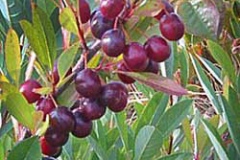
- A single sandcherry fruit, cut in half to reveal the flesh. The flesh is pale yellow and juicy, with a few small seeds.

- A close-up of a sandcherry blossom. The blossom is white with five petals, and it has a delicate fragrance.
- A sandcherry tree in full bloom. The tree is covered in white blossoms, which attract bees and other pollinators.
- A sandcherry tree with ripe fruits. The fruits are bright red and clustered together on the branches.
- A sandcherry shrub in the wild. The shrub is covered in small, dark green leaves and clusters of red fruits.
- A sandcherry pie. The pie is made with a flaky crust and a filling of ripe sandcherry fruits.

- A sandcherry jam. The jam is made with ripe sandcherry fruits and sugar. It is a delicious way to enjoy the flavor of sandcherry fruits.
- A sandcherry cobbler. The cobbler is made with a biscuit topping and a filling of ripe sandcherry fruits.

- A sandcherry ice cream. The ice cream is made with ripe sandcherry fruits and cream. It is a refreshing and delicious treat.


Post a Comment for "Sandcherry: The Easytogrow Shrub That Produces Delicious Fruit"